Nesco Pressure Cooker Instruction Manual: A Comprehensive Guide
This manual details Nesco pressure cooker operation, covering setup, safety, cooking techniques, and maintenance. It references electric fryer models like PFE 561 and PFE 591,
emphasizing efficient cooking and proper usage.
Understanding Your Nesco Pressure Cooker
Your Nesco pressure cooker is a versatile kitchen appliance designed to significantly reduce cooking times while preserving flavor and nutrients; Unlike conventional cooking methods, pressure cooking utilizes steam pressure to elevate the boiling point of liquids, resulting in faster and more efficient food preparation. Models like the PFE 561 and PFE 591, as highlighted in commercial fryer documentation, demonstrate the power of pressurized cooking, though adapted for home use.
This technology isn’t new; Henny Penny pioneered commercial pressure frying, showcasing the benefits of this method. Understanding the principles behind pressure cooking – the relationship between pressure, temperature, and cooking time – is crucial for safe and successful operation. The cooker’s sealed environment traps steam, increasing internal temperature. This higher temperature cooks food more rapidly, impacting textures and flavors differently than traditional methods.
Furthermore, recognizing the cooker’s components and their functions, as detailed in the full instruction manual, will enhance your cooking experience. Familiarize yourself with the pressure regulator, safety valves, and locking mechanisms to ensure safe operation and optimal results. The cooker’s ability to handle diverse ingredients, from meats and vegetables to grains and desserts, makes it a valuable addition to any kitchen.
Components and Parts Identification
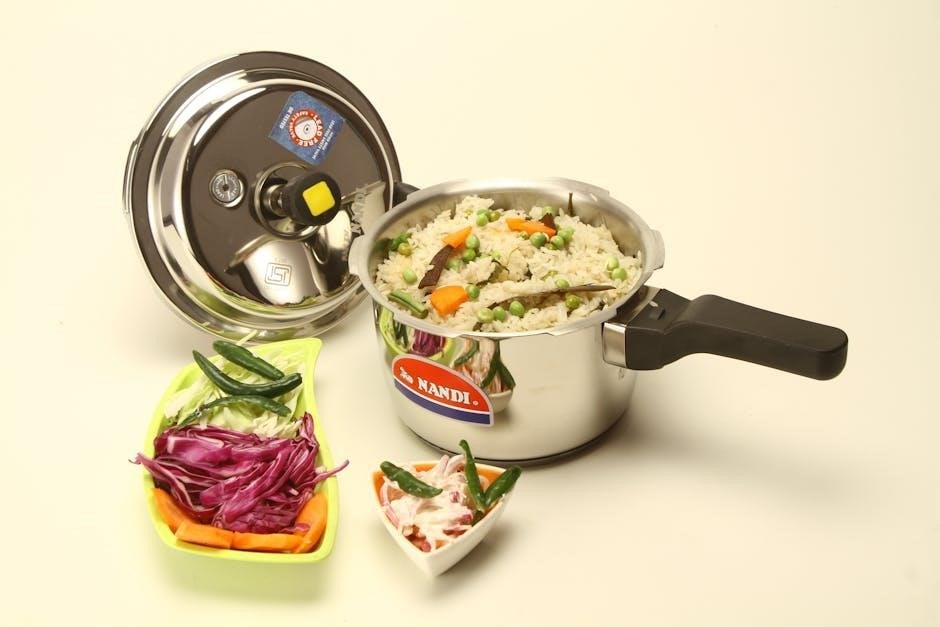
A Nesco pressure cooker comprises several key components working in unison to deliver safe and efficient cooking. The primary structure includes the cooker body, typically constructed from durable stainless steel, and a securely fitting lid; This lid features a robust locking mechanism, essential for maintaining internal pressure – a principle utilized in commercial pressure fryers like the PFE 561 and PFE 591.

Essential parts include the pressure regulator, controlling the internal pressure level, and safety valves, designed to release excess pressure preventing dangerous build-up. The gasket, a rubber seal, ensures an airtight closure between the lid and the body. Inside, you’ll find a cooking pot, often removable for easy cleaning. Some models may include a steam rack, ideal for steaming vegetables or keeping food elevated from the liquid.
Understanding each part’s function is vital. The pressure indicator, often a colored pin or dial, visually displays the pressure level; Refer to the manual for specific component locations and diagrams. Proper identification ensures correct assembly, operation, and maintenance, maximizing the cooker’s lifespan and performance, mirroring the reliability found in professional kitchen equipment.
Safety Precautions and Warnings
Prioritizing safety is paramount when using a Nesco pressure cooker. Always ensure the lid is securely locked before applying heat; a faulty seal can lead to pressure loss or, conversely, dangerous pressure build-up, similar to concerns in commercial pressure frying systems like the PFE 591.
Never attempt to open the cooker while pressure remains inside. Utilize the designated pressure release methods – natural or quick release – as detailed in this manual. Avoid overfilling the cooker; leave sufficient headspace to prevent food from blocking the pressure regulator or safety valves. Regularly inspect the gasket for cracks or damage, replacing it when necessary to maintain a proper seal.
Keep the cooker clean, ensuring vents and valves are free from obstructions. Be cautious of hot steam released during pressure release; use oven mitts and direct steam away from your face and body. Do not modify the cooker in any way. Improper use can result in burns or injury. Refer to the warranty information for limitations and responsible operation, ensuring longevity and safe performance.
Getting Started: Initial Setup
Before your first use, thoroughly inspect your Nesco pressure cooker for any shipping damage. Wash the inner pot, lid, and all removable parts with warm, soapy water, then dry completely. Familiarize yourself with all components – the cooker base, lid with locking mechanism, pressure regulator, safety valves, and condensation collector.
Perform a water test to verify proper sealing. Add 2 cups of water to the inner pot, close and lock the lid, and set the cooker to high pressure for 5 minutes. Observe that pressure builds and the regulator operates correctly. Allow a natural pressure release. This confirms the unit functions as intended, similar to initial checks performed on commercial units like the PFE 561.
Read this entire instruction manual before attempting any recipes. Understand the difference between wet and dry cooking methods, and the importance of proper liquid ratios. Ensure the cooker is placed on a stable, heat-resistant surface, away from flammable materials. Proper setup ensures safe and efficient operation, maximizing your cooking experience.
Pressure Cooking Basics: Wet vs. Dry Cooking
Nesco pressure cookers utilize both wet and dry cooking methods, each suited for different food types and desired outcomes. Wet cooking involves adding liquid – water, broth, or sauce – to create steam, which cooks the food. This is ideal for soups, stews, and tenderizing tougher cuts of meat, mirroring processes in high-volume pressure fryers like the PFE 591.
Dry cooking, conversely, uses minimal liquid, relying on the steam generated from the food’s natural moisture. This method excels with foods that don’t require a lot of liquid to cook, such as certain vegetables or when achieving a crispy texture. It’s crucial to avoid scorching during dry cooking; ensure sufficient natural moisture or add a tablespoon or two of liquid.
Understanding liquid ratios is paramount. Too little liquid can cause burning, while too much can result in diluted flavors. Always consult recipes for specific liquid requirements. Remember, pressure cooking retains moisture exceptionally well, often requiring less liquid than conventional methods. Proper technique, like those used in innovative food technologies, ensures optimal results.
Pressure Cooking Times for Common Foods
Accurate timing is crucial for successful pressure cooking with your Nesco cooker. Below are approximate guidelines; always refer to specific recipes for best results. For tougher meats like beef chuck, allow 60-75 minutes at high pressure, followed by natural pressure release. Chicken pieces typically require 15-20 minutes, while a whole chicken takes around 25-30 minutes.
Vegetables vary significantly. Potatoes take 8-12 minutes, carrots 5-7 minutes, and broccoli just 3-5 minutes. Grains also benefit from pressure cooking; white rice cooks in 5 minutes, brown rice in 22-25 minutes. Beans, notoriously time-consuming, can be ready in 20-40 minutes, depending on the type and whether they’ve been soaked.
These times assume standard pressure settings. Adjustments may be needed based on altitude and the quantity of food. Remember, pressure cooking, similar to high-efficiency immersed systems, accelerates cooking, but precise timing prevents over or undercooking. Consistent monitoring and recipe adherence are key, mirroring the precision needed in pharmaceutical research and food science.
Using the Pressure Cooker for Soups and Stews
Your Nesco pressure cooker excels at creating flavorful soups and hearty stews in a fraction of the traditional time. Begin by sautéing aromatics – onions, garlic, and celery – directly in the pot using the sauté function, if available. Brown meats beforehand for enhanced depth of flavor, similar to commercial pressure frying techniques.

Add liquids (broth, stock, or water) and other ingredients. Ensure the liquid level is above the minimum fill line, but do not exceed the maximum. For thicker stews, a slurry of cornstarch or flour can be added after pressure cooking. Pressure cook for 20-30 minutes for most vegetable-based soups, and 45-60 minutes for those containing tougher meats.
Natural pressure release is recommended for soups and stews to prevent splattering and allow flavors to meld. This mirrors the careful control needed in innovative food technologies. Consider the impact of high strain rates and temperatures, as described in material science, when adjusting cooking times. The result is a rich, deeply flavored dish with minimal effort.
Cooking Meats with Your Nesco Pressure Cooker
The Nesco pressure cooker dramatically reduces cooking times for various meats, yielding tender and flavorful results. Prior to pressure cooking, searing the meat – similar to commercial pressure frying – enhances its taste and texture. Utilize the sauté function if your model includes one, ensuring even browning.
Add sufficient liquid (broth, water, or marinade) to cover at least half of the meat. For tougher cuts like brisket or short ribs, increase the liquid level. Cooking times vary based on meat type and size; generally, allow 20-30 minutes per pound for smaller cuts like chicken thighs, and 45-60 minutes for larger roasts.
Consider the principles of constitutive modeling and data for metals – while not directly applicable, understanding how heat affects protein structure is beneficial. Natural pressure release is ideal for larger cuts, allowing for maximum tenderness. Always check internal temperature with a meat thermometer to ensure safe consumption, referencing established pharmacotherapy guidelines for food safety.
Pressure Cooking Vegetables and Grains
Nesco pressure cookers excel at preparing vegetables and grains quickly and efficiently, preserving nutrients often lost through conventional methods. Unlike meat, vegetables generally require shorter cooking times; overcooking results in mushiness. A small amount of liquid is sufficient – typically 1 cup for every 2 cups of vegetables or grains.
For grains like rice and quinoa, a 1:2 ratio of grain to water is standard. Consider the impact of high strain rates and temperatures, similar to metal processing, on starch structure. Cooking times range from 3-5 minutes for delicate vegetables like broccoli to 15-20 minutes for harder varieties like potatoes or carrots.
Employ the quick-release method for vegetables to halt cooking immediately. Grains benefit from a 10-minute natural pressure release followed by a quick release. Remember that innovative technologies in food processing, as highlighted in scientific publications, continually refine optimal cooking parameters. Always consult specific recipes for best results, ensuring alignment with reviewed scientific data.
Making Desserts in a Pressure Cooker
Surprisingly, Nesco pressure cookers are versatile enough for creating delightful desserts! The moist-heat environment is ideal for cheesecakes, puddings, and even cakes. Unlike savory dishes requiring precise timing, dessert recipes often benefit from a longer natural pressure release to prevent textural issues.
Cheesecakes typically require 30-40 minutes of pressure cooking followed by a complete natural release. Ensure the cheesecake is well-sealed to prevent liquid intrusion. Puddings, similar to grain cooking, need minimal liquid and a shorter cooking time – around 10-15 minutes.
Cakes can be pressure cooked, but require experimentation to adjust for the enclosed environment. Consider the impact of high temperatures on ingredients, akin to metal processing under strain. Recipes often involve placing the cake pan on a trivet within the cooker. Always prioritize safety and consult reliable recipes, referencing innovative food technologies for optimal results. Remember, like all cooking, understanding the science behind the process enhances success.
Releasing Pressure: Natural vs. Quick Release
Understanding pressure release methods is crucial for safe and successful Nesco pressure cooking. There are two primary techniques: natural pressure release (NPR) and quick release (QR). NPR involves allowing the pressure to dissipate gradually over time – typically 10-30 minutes, or even longer for larger volumes of liquid.

NPR is ideal for soups, stews, and dishes with substantial liquid, preventing splattering and ensuring even cooking. QR, achieved by carefully activating the pressure release valve, rapidly reduces pressure. This is suitable for foods that continue to cook from residual heat, like vegetables, preventing overcooking.
However, QR can cause liquids to sputter, so caution is essential. Consider the material properties under strain, similar to metal subjected to high temperatures, when releasing pressure. Always follow recipe instructions regarding release method. Improper release can affect texture and potentially compromise safety, mirroring the need for precise control in commercial pressure frying processes.
Cleaning and Maintenance
Regular cleaning and maintenance are vital for extending the life and ensuring the safe operation of your Nesco pressure cooker. After each use, allow the unit to cool completely before disassembling. The inner pot, lid, and sealing ring should be washed with warm, soapy water. Avoid abrasive cleaners, which can damage the surfaces.

Inspect the sealing ring for cracks or damage and replace it as needed – a compromised seal can prevent proper pressure build-up. The pressure release valve should be checked for blockages and cleaned thoroughly. Ensure all components are completely dry before reassembly.
The exterior of the cooker can be wiped down with a damp cloth. Avoid immersing the electrical base in water. Similar to maintaining commercial pressure fryers, consistent cleaning prevents residue build-up and ensures optimal performance. Proper care, like attention to material strain, will contribute to long-term reliability and consistent cooking results.

Troubleshooting Common Issues
If your Nesco pressure cooker isn’t building pressure, first verify the sealing ring is correctly installed and undamaged. A faulty seal is a frequent cause. Also, ensure the lid is securely locked in place; improper closure prevents pressurization. Check the pressure release valve to confirm it isn’t stuck in the venting position.
Food burning? Reduce cooking time or add more liquid. Remember the difference between wet and dry cooking methods. If the unit won’t release pressure, allow for a natural release, or carefully follow quick release instructions. Consistent issues may indicate a problem with the heating element, similar to potential failures in commercial fryers.
Error codes? Consult the full manual for specific code meanings. Like addressing issues in complex systems involving strain and high temperatures, methodical checking of components is key. If problems persist, contact Nesco support for assistance, referencing your model number for efficient troubleshooting.

Nesco Pressure Cooker Recipes
Unlock a world of culinary possibilities! Your Nesco pressure cooker excels beyond basic cooking, offering faster, flavorful results. Start with a hearty beef stew – tender meat in under an hour! Explore chicken and vegetable dishes, utilizing pressure cooking to retain vital nutrients.
For quicker meals, try pressure-cooked rice or grains. Desserts are surprisingly easy; cheesecakes and chocolate cakes emerge moist and decadent. Remember to adjust cooking times based on ingredient quantities, similar to adapting recipes for commercial pressure fryers.

Experiment with soups and broths, extracting maximum flavor from bones and vegetables. Consider recipes inspired by innovative food technologies and biological active substances. Explore online resources and Nesco’s recipe database for inspiration. Don’t be afraid to adapt existing recipes, leveraging the cooker’s efficiency for delicious, convenient meals!

Warranty Information and Support
Your Nesco pressure cooker is backed by a manufacturer’s warranty, protecting against defects in materials and workmanship. Please retain your proof of purchase for warranty claims. The warranty period varies by model; consult your included documentation for specifics.
For assistance, visit the official Nesco website. There, you’ll find frequently asked questions, troubleshooting guides, and downloadable resources. Nesco’s support team is available via email and phone to address your concerns. Refer to the manual for contact details.

Should you encounter issues, first consult the troubleshooting section of this manual. If problems persist, contact Nesco support, providing your model number and a detailed description of the issue. Remember, proper maintenance, as outlined in this guide, is crucial for maintaining warranty validity. Like scientific publications indexed in RSCI, Nesco prioritizes quality and support.